


Ringing in Your Ears After a Concert: How Long It Lasts and When to Worry
You left the show, the car is quiet, and your ears are still ringing. Here is what that means and how long it usually takes to fade.

The show was great. Now you're in the car, it's quiet, and there's a high whine in both ears. Almost everyone who goes to concerts, games or clubs has had this, and most of the time it fades. But it's a signal worth listening to.
What's happening
Loud sound overworks the tiny hair cells in the inner ear. Afterward, hearing can be temporarily dulled (doctors call it a temporary threshold shift) and many people notice ringing. A 2025 study measured 51 young adults right after a loud concert and found clear temporary changes in hearing thresholds along with more reports of tinnitus.
How long does it last?
For most people the ringing fades within hours to a couple of days, as hearing returns to normal. If it's still there after a week, or it keeps coming back after every loud event, that's the moment to get a hearing test.
Is "temporary" really temporary?
Research in animals by Kujawa and Liberman showed that noise exposure can damage nerve connections in the inner ear even when hearing tests return to normal, sometimes called "hidden hearing loss." Human studies are mixed so far, but the takeaway is simple: repeated loud exposure adds up. Many people with lifelong tinnitus trace it back to years of concerts, machinery or shooting without protection.
What to do tonight
- Give your ears quiet rest for 24 hours: no headphones, no loud TV.
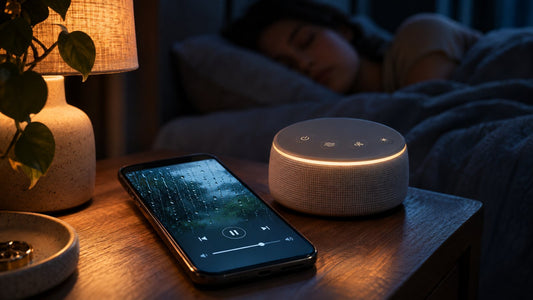
- Don't sleep in total silence. A fan or low, steady sound helps the ringing feel less dominant.
- Skip the extra drinks and late coffee if they make you sleep worse.
- Next time, wear earplugs. Musician-style earplugs lower volume evenly so the music still sounds good.
See a doctor promptly if
- you have sudden hearing loss in one ear,
- the ringing is in one ear only and doesn't fade,
- you feel dizzy or have ear pain.
If the concert was years ago and the ringing never left, you may find our guide on why tinnitus gets worse at night useful.
Looking for a calmer bedtime routine?
Quell is a herbal patch you wear behind the ear at night, with a 60-second jaw and neck wind-down routine. Nothing to swallow, charge or switch on.
Sources
- Temporary threshold shift and tinnitus after a concert in young adults, Frontiers in Audiology and Otology, 2025
- Kujawa SG, Liberman MC. Cochlear nerve degeneration after 'temporary' noise-induced hearing loss, 2009 (summary)
- Bhatt JM, Lin HW, Bhattacharyya N. Prevalence, severity, exposures, and treatment patterns of tinnitus in the United States. JAMA Otolaryngol Head Neck Surg, 2016
This article is for general information and is not medical advice. If your tinnitus is sudden, in one ear only, pulses with your heartbeat, or comes with hearing loss, dizziness or pain, see a doctor promptly.
Keep reading
 caffeine
Caffeine, Alcohol, Salt or Stress? What Really Makes Tinnitus Worse
Should you quit coffee? Here's what research really says about common tinnitus triggers, and a simple way to find your own.
 ear patch
Do Tinnitus Patches Work? An Honest Look at Herbal Ear Patches
Herbal ear patches are everywhere online. Here is what's inside, what they can and can't do, and how people actually use them.
 sleep
White Noise, Fans and TV: Do Sleep Sounds Really Help Tinnitus?
Almost everyone with tinnitus has tried sleeping with the TV on. Here is what actually works with sound at night, and what to avoid.