


Do Tinnitus Patches Work? An Honest Look at Herbal Ear Patches
Herbal ear patches are everywhere online. Here is what's inside, what they can and can't do, and how people actually use them.

If you've searched for tinnitus relief lately, you've probably seen small round patches you wear behind the ear. Some sites promise miracles. Some reviews say they did nothing. Here's an honest look, from people who make one.
What is a tinnitus patch?
Most are herbal patches based on traditional Chinese ear-care formulas: a cotton pad with plant extracts, applied to the skin behind the ear for 8–12 hours, usually overnight.
What's typically inside
- Menthol and borneol: give the cool tingle you feel within seconds. Borneol is traditionally used as a carrier for the other herbs.
- Cocklebur fruit and magnolia flower: the classic pair traditionally used for the ears and head.
- Angelica and safflower: traditionally used to support circulation.
- Gentian, gardenia, forsythia and honeysuckle: traditional calming, cooling herbs.
You can see every ingredient in Quell, and the job each one does, on our product page.
What to realistically expect
- They're not a cure. No patch, pill or drop makes tinnitus disappear. Clinical guidelines don't recommend any supplement as a treatment.
- Results vary. When we sent our first batch to 41 beta testers, some noticed calmer nights within a week, some after a few weeks, and some noticed little difference. We publish all of their notes, the mixed ones included.
- Give it three weeks. One night tells you very little, because tinnitus naturally goes up and down.
- The routine matters. People who pair the patch with a consistent wind-down routine tend to get more from it.
Who might like them
People who want a no-pill, no-device bedtime ritual, who sleep on their side and can't stand earbuds, or whose ringing is worst at night.
Who should skip them
Anyone with sensitive or broken skin behind the ear, pregnant women and children. Patch test on your forearm first.
Looking for a calmer bedtime routine?
Every Quell order comes with a 60-day guarantee: if it's not for you, we refund you and you keep the patches.
Sources
- Tunkel DE. et al. Clinical Practice Guideline: Tinnitus. Otolaryngology–Head and Neck Surgery, 2014
- Bhatt JM, Lin HW, Bhattacharyya N. Prevalence, severity, exposures, and treatment patterns of tinnitus in the United States. JAMA Otolaryngol Head Neck Surg, 2016
This article is for general information and is not medical advice. If your tinnitus is sudden, in one ear only, pulses with your heartbeat, or comes with hearing loss, dizziness or pain, see a doctor promptly.
Keep reading
 caffeine
Caffeine, Alcohol, Salt or Stress? What Really Makes Tinnitus Worse
Should you quit coffee? Here's what research really says about common tinnitus triggers, and a simple way to find your own.
 sleep
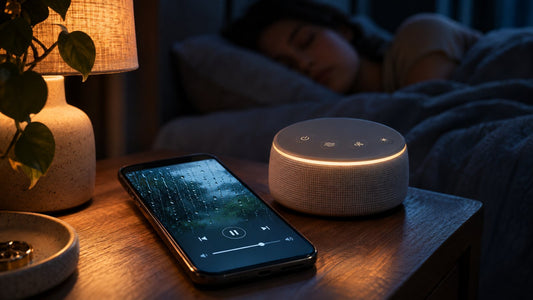
White Noise, Fans and TV: Do Sleep Sounds Really Help Tinnitus?
Almost everyone with tinnitus has tried sleeping with the TV on. Here is what actually works with sound at night, and what to avoid.
 military
Tinnitus in Veterans: Why It's the #1 VA Disability and What Helps at Home
Artillery, rifles, jet engines, generators. If you served, you probably know the sound. Here is why tinnitus is so common among veterans.