


How to Sleep With Tinnitus: 12 Bedtime Habits That Make the Ringing Easier to Live With
You can't always switch tinnitus off. You can change the bedtime around it. Twelve habits people with ringing ears swear by.

Sleep and tinnitus are tangled together. Studies find insomnia in roughly 7 out of 10 people with chronic tinnitus, and poor sleep makes the ringing harder to ignore the next day. The good news: small changes to your bedtime add up.
Set up the room
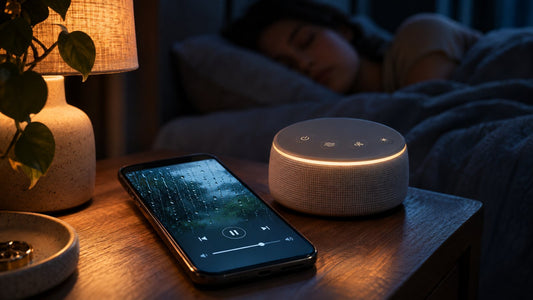
- Never sleep in total silence. A fan, soft rain or brown noise reduces the contrast between the ringing and the room.
- Keep sound below your tinnitus. The goal is to soften it, not to drown it out. If you can't hear the ringing at all, it's probably too loud.
- Use a sleep timer or a bedside speaker instead of earbuds, which can make your ears sore by morning.
- Keep the room cool and dark. Better sleep quality makes tinnitus less bothersome overall.
Build a wind-down routine
- Same time, same steps. A predictable 10-minute routine tells your brain it's time to switch off.
- Release your jaw and neck. If your ringing changes when you clench, two minutes of jaw and neck stretches can help. See our guide to jaw-related tinnitus.
- Give yourself a physical cue. Many people like something they can feel, like a cool sensation or a warm drink, as the signal that the day is over.
- Read paper, not screens, for the last 20 minutes.
During the day
- Watch late caffeine and alcohol. Not because caffeine causes tinnitus (a large Harvard study found the opposite), but because both can wreck sleep.
- Protect your ears from loud noise so you don't start the night with a spike.
At 2 a.m.
- Don't fight it in bed for an hour. If you can't sleep after 20 minutes, get up, read in dim light, and come back when sleepy. This is a core step of CBT for insomnia.
- Don't check the ringing. Asking yourself "is it louder?" keeps your attention on it. Shift attention to your breath or your body instead.
If tinnitus has wrecked your sleep for months, ask your doctor about cognitive behavioral therapy, which the U.S. tinnitus guideline recommends for persistent, bothersome tinnitus.
Looking for a calmer bedtime routine?
Quell is a herbal patch you wear behind the ear at night, with a 60-second jaw and neck wind-down routine. Nothing to swallow, charge or switch on.
Sources
- Schecklmann M. et al. Psychophysiological associations between chronic tinnitus and sleep, 2015
- Aazh H. et al. Insomnia in patients with tinnitus, J Am Acad Audiol, 2019
- Tunkel DE. et al. Clinical Practice Guideline: Tinnitus. Otolaryngology–Head and Neck Surgery, 2014
- Glicksman JT, Curhan SG, Curhan GC. A prospective study of caffeine intake and risk of incident tinnitus. Am J Med, 2014 (Brigham and Women's Hospital)
This article is for general information and is not medical advice. If your tinnitus is sudden, in one ear only, pulses with your heartbeat, or comes with hearing loss, dizziness or pain, see a doctor promptly.
Keep reading
 caffeine
Caffeine, Alcohol, Salt or Stress? What Really Makes Tinnitus Worse
Should you quit coffee? Here's what research really says about common tinnitus triggers, and a simple way to find your own.
 ear patch
Do Tinnitus Patches Work? An Honest Look at Herbal Ear Patches
Herbal ear patches are everywhere online. Here is what's inside, what they can and can't do, and how people actually use them.
 sleep
White Noise, Fans and TV: Do Sleep Sounds Really Help Tinnitus?
Almost everyone with tinnitus has tried sleeping with the TV on. Here is what actually works with sound at night, and what to avoid.